Edit: Keeping everything below for posterity, but i’ve just put the project live now. Feel free to give it a shot, it’s free and open source so hopefully somebody like myself out there finds it and enjoys it. The github page has a pretty comprehensive rundown of all of it’s features.

Okay so this essentially comes out of a deep want for over a decade now to be able to browse and discover my music by hierarchical genres. Tried to build it in the past with foobar and got a half working prototype then gave up. Finally got around to doing it for real.

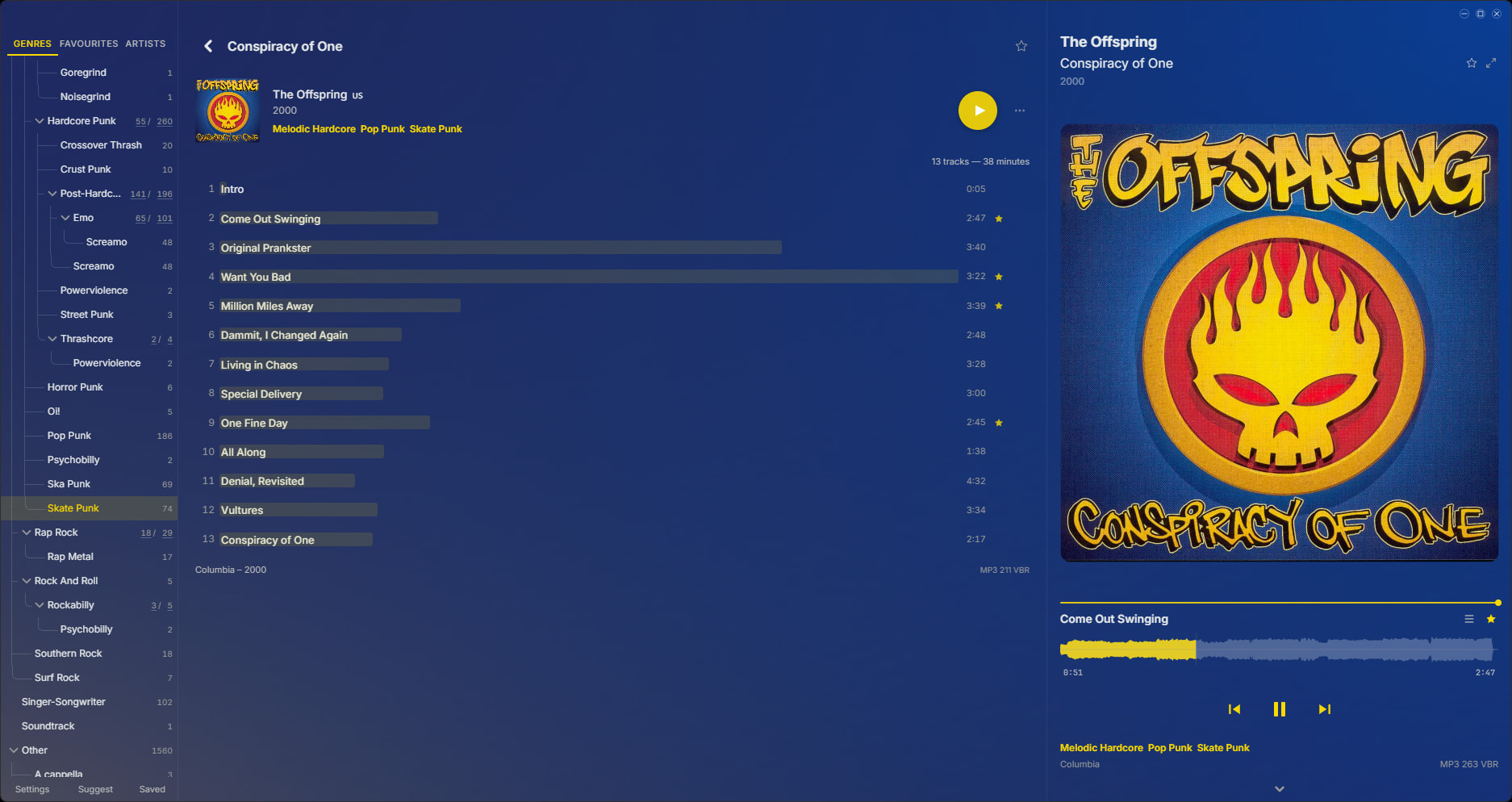
More screenshots below
There are some other features (cached local fuzzy find search with AND etc operators) that aren’t shown but the screenshots should give you a good idea of what i’m going for.
Any interest at all or is this just extremely niche and only for genre nerds like me? I plan to just release it fully open source i have no interest in anything commercial. It’s cross platform and I’ve so far been testing on MacOS mostly but also a fair bit on Windows and Ubuntu.
I am building it to be as they say fairly “opinionated”. I don’t want to build a fully feature complete thing that supports every possible little type of interaction. I just want it to do what its meant to do, and do it well. It’s basically just built entirely for what I personally want and…well hopefully some other folks have similar tastes to me.
Comes with a set of open source hierarchical data from the Beets music tagger project (which in turn is just a whitelist of last.fm genres they use to tag from), but you can also create your own heirarchy if you want and import it in a standard tabbed/spaced format that is easy to build (Featured in screenshots is my custom example, to really show it off)
It will feature your album in all genres where it is tagged (did you know plex supports more than 2 genre tags, even if the api doesn’t give them out as standard…hence we have to do a little local caching to make it work), and will deduplicate results and let you browse at any parent/child level and see all results. Cool right?
Lemme know what you think, open to suggestions or critiques while i’m still sharpening everything up:



 )
)

