Given the mass shortage of pis and that this will continue not looking at other options is a bit short sighted. Yes pis are good and flexible alternative to a full-size pc for audio but for the last 2 years and sill continuing they are hard to source and if you already have great audio gear why change to a diy approach that’s hard to get . If the 4 I currently have in use die I am stuck and will need to replace with something more readily available. I have had a pi zero on back order for over a year now. The only ones readily available are the compute modules for building into a device.
There are a number of ones which work great and are just as affordable if not more so than actual Pis. NanoPi R4S, R5C, radxa, orange Pi etc.
So you support those currently? They tend not to have as larger hardware support that the pi has especially for audio playback. The pi is king here for the large amount of quality audio boards.
You are aware of the RPiLocator? They can be had at a reasonable price, one just have to be quick when they are!
“Support” is a strong word, but I have a few running here. If it can run Armbian, it should be fine, and note that I prefer an external USB DAC like this one over any of the Hats, not least because you can use it with whatever hardware you want.
I use a mix of both but as some power speakers directly and are built into the cabinets to make a nice and tidy wireless speaker system I need DAC/amplifier hats.
Yes i don’t have time to keep looking at it, none in stock anywhere the only ones that come up here occasionally are well overpriced.
I’m not meaning to be obstreperous, but there are some lovely class D digital amps which are small and would probably fit inside a cabinet as well (e.g. AIYIMA, Fosi Audio, SMSL, LOXJIE…)
Not in my current ones barely enough room for the pi and Hifiberry. The drivers and cross overs take up more room inside than you think and only small areas to work with due the design and bracing inside. Plus you don’t want to remove all the wadding or it sounds just too boxy. It’s a fine line. Big floorstanders yes but these are not. Also you are wrangling more power cables pi and amp hat has one power cord.
I love that this thread is just blowing up. Honestly, I just wanted Plexamp on my Bluesound Powernode
Gotcha, would love to see a photo!
Yeah, sorry, we got derailed a bit. I doubt that will happen w/o using Headless as a line input, as it’s a closed system.
Stereo pair in my office , had to rewire the speaker binding posts and crossover so they send out to the left speaker from the amp. The pi on the desk is a remote for them. All of them currently has Ropieee as I am using Roon for my audio through the house.

Bedroom converted centre speaker that works remarkably well. It’s mono so I have to use Roons DSP to properly down convert stereo to mono. You can see not much room in there to move about, and hard to mount it away from the drivers. The stereo one above was even tighter. But no images of that. They both have a simple DC socket in the cabinet that connects to the amp inside and powers the lot. So it’s neat.
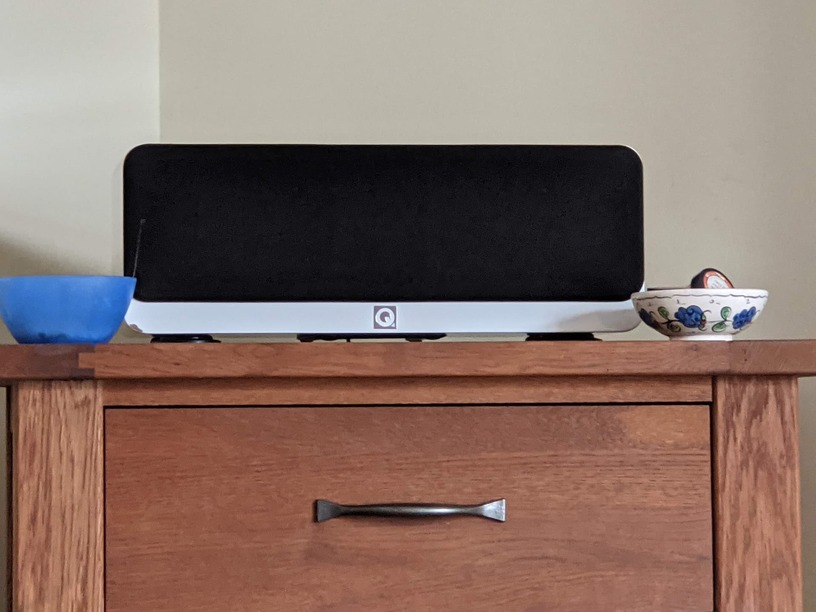
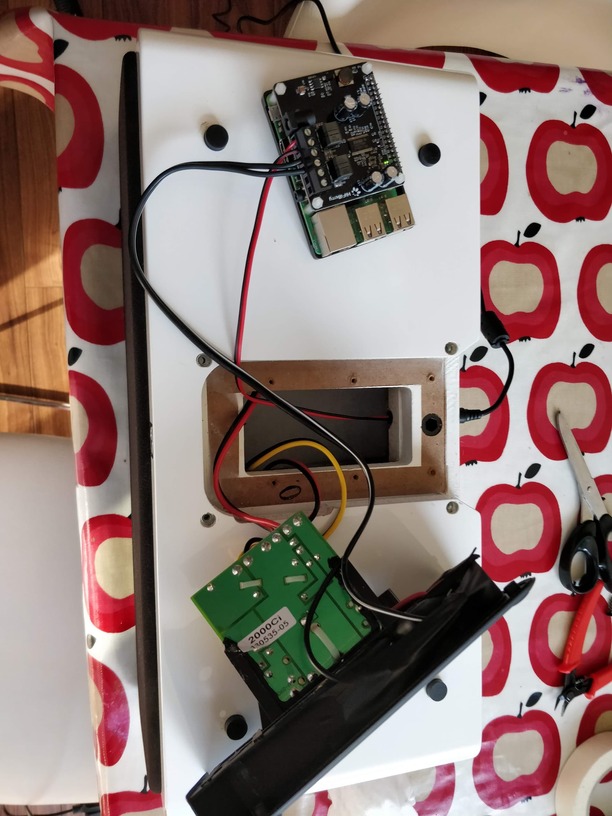

Been up and running 4 years now; had the pi die in the stereo pair early this year and used my last pi4 to change it over.
What about a compromise?
Plexamp partners with a Pi or similar board to come out with a Plexamp version? All that would have to mean is a Plexamp image to load onto a Micro SD card and a Plexamp branded case for the board. I think that would be a simple enough ask and would help people in picking out a board and installing Plexamp.
Plus the branding would be nice with a custom case 
I think the current headless version is more friendly than it was previously. The change in nodejs requirements is very welcome as it’s available in most distro’s without having to know anything about node package management. However, I think it’d help newcomers if the associated service & upgrade script were usable without root/sudo, which would also simplify things for people not running PIOS with the username ‘pi’. Putting more work into a single distro doesn’t make much sense when some small tweaks could make it easer to use on many more. @elan - I’d be happy to contribute in this regard if you don’t have the time.
My script, referenced above, allows you to change to any user during install.
On PIOS, using sudo yes? I’m just saying that some very small changes could make headless more accessible. I’m guessing that most people looking to tinker wont care but it’s a stumbling block for others.
EDIT: Deleted pastebin links & created additional reply below.
how hard is implement stream to DLNA so we can stream to any device that support it, i mean every other of you competition can do this, with out people have to go out and need to get a pi for this, it look like you guys just don’t want to implement for whatever reason
Plex is a walled garden, it is a private company, it doesn’t have to do what others are doing, but at the same time, it’s been beaten already that DLNA is an old protocol that doesn’t fit within the experience that Plex wants to give to its users. They have reasons, you’re just not listening.
I really want to be able to have loudness correction and the all other Plexamp goodness available, but at the same time I don’t want to fill my house with Pi’s attached to speakers to achieve a multi-room setup.
I basically just want the Sonos experience with a “single device” that has the speaker with the streaming player built in without having to resort to a DYI hack. Hopefully Plex will partner with a manufacturer in the future.
sorry, but embedded device per endpoint is what we’re targeting at the moment. prices and availability continue to improve, and this is the best way to get all the player features with the best possible experience (great sync, low latency).
