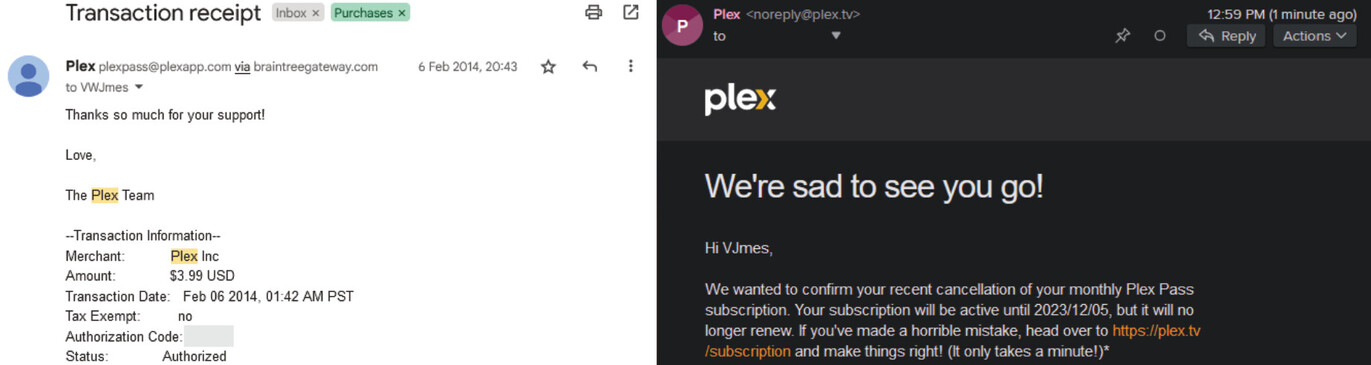
Firstly, I appreciate the respone from Plex itself surrounding the rollout of this feature, it has confirmed my decision to end my PlexPass subscription after nearly 10 years:
Let’s go through this response:
Discover Together is Opt In
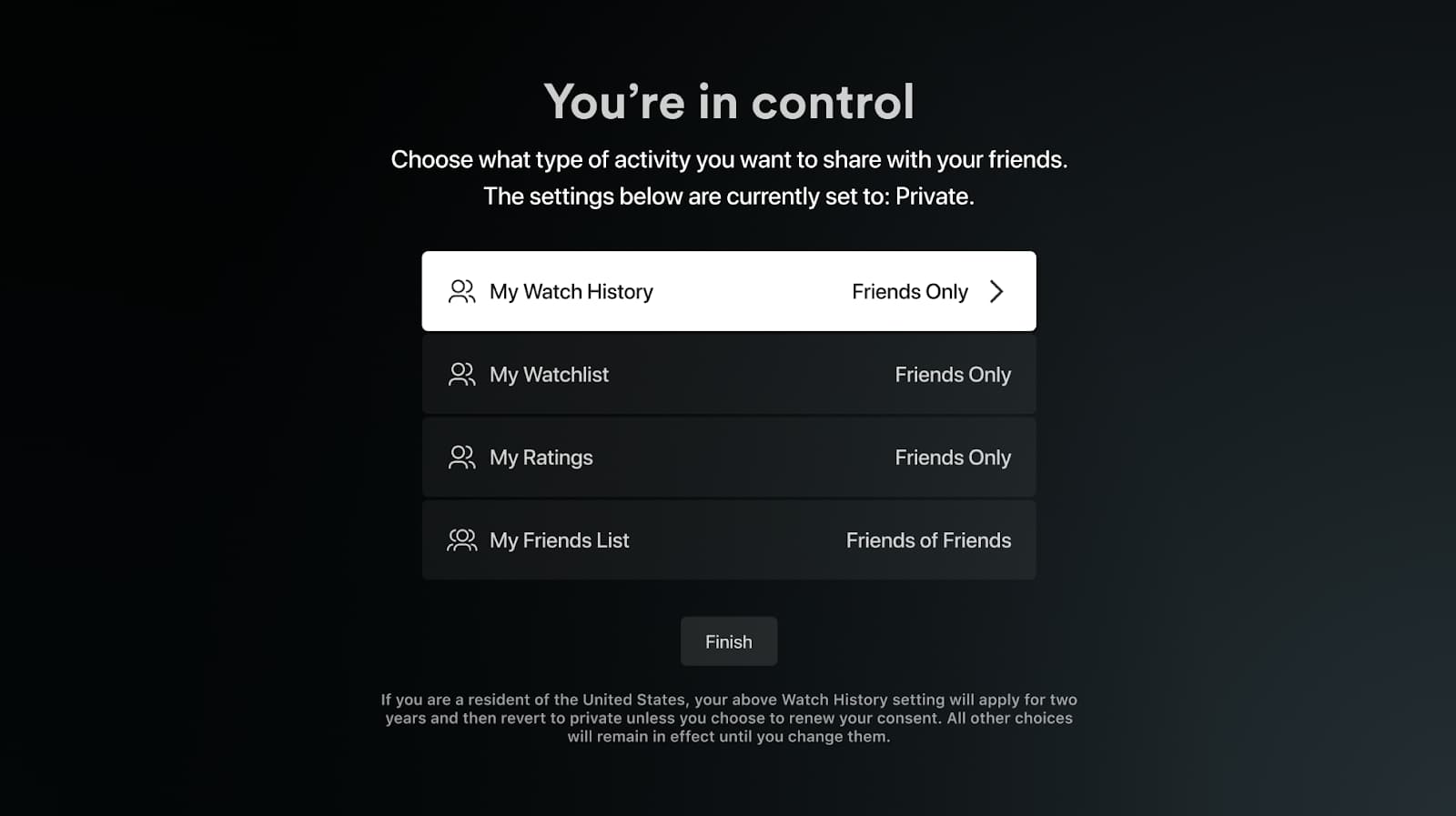
When someone opened Plex for the first time after Discover Together launched on November 1st, they saw the following screens (note: this only applies to people who were not in the Discover Together Beta. … The last screen allows you to choose your desired privacy settings.
…
This statement, and the accompanying screenshot completely contradict each other. Users upon opening Plex are presented with a four-page modal that has to the clicked through to the last page, where a number of sharing options are enabled if the user does nothing but select finish.
Either Plex is being disingenuous about what it considered to be opt-in, or is being willfully ignorant of it. At the very least this is an obvious example of a UI dark pattern.
I’m not willing (nor should other users) to give Plex the benefit of the doubt here, given the amount of UI work that has gone into the service over the last decade. Not to mention that it’s well known that 95% of users do not adjust from default settings.
Discover Together + Syncing Watch State and Ratings
Last year we added the ability to Sync your Watch State and Ratings with Plex. This enables a movie or show to be correctly marked as watched wherever you see it on Plex (Plex Media Server, our free Movies & Shows catalog, or Discover).
This feature is disabled by default and users must opt in to start syncing.
…
Again, another dark pattern, notice which button here is being nudged/highlighted.
This time however, it’s for a more innocuous-sounding feature like syncing your watch state, which has now been modified and shoe-horned into this new feature.
I commented in my original post how Plex shoe-horned in it’s media sharing feature into a “friends” feature which has subsequently also been shoe-horned into this on-by-default feature,
Week In Review Emails
Last week we started a new weekly email series intended to highlight your friends’ activity on Plex. The information contained in these emails is accessible from within Plex’s Discover source in the Activity Feed based on your friends’ Privacy Settings.
This email was enabled by default and caught some of our users by surprise. Since these emails are intended to summarize activity from your friends and don’t contain Plex curated content, they are managed by our transactional email channel and NOT our Marketing email channel.
An interesting aside to this, is the one positive action Plex took to announce a privacy-impacting new feature to most of the userbase was sent by accident:
The upshot from this is users are at least aware now of a feature nobody really asked for.
Adult Content / Porn
Some users are concerned that any adult content they watch will be shared with their friends. Discover Together relies on the current Plex metadata agents to match community activity to the appropriate title. Some of our metadata sources do include some adult films, but these have been flagged as adult in our metadata database.
While exposing the porn habits of users is the most obvious and egregious example of the privacy-implications of this feature, and Plex has taken steps to mitigate it. There are plenty of other possible scenarios around the consequences of this feature.
The viewing history of LGBT youth in a household of less-than-supportive parents could be made inadvertently available, teenage friends of someone who’s previously shared their library could have an avenue to bully someone for their movie tastes, or conservative grandparents starting a fight over the Christmas table around the woke Hollywood agenda being shown to their grandkids.
All situations which at best can make things very awkward at best, thanks to a feature like this rolled out just in time for Christmas 2023!
I haven’t even touched on the potential legal consequences from jurisdictions that have attempted to regulate the scourge of dark patterns, data harvesting and anti-privacy data policies. I’ll leave that commentary to the more legally inclined.
As I mentioned in my previous post on this, Plex has been a fantastic application for myself, one that I’ve happily supported for many years. Given the roll-out of this feature and the “response” to criticism, it seems quite clear now to become another enshittified web platform, where the users are the product, not the customer.
Well I was a Plex user, and a paying supporter too. Guess I’ll go elsewhere.